Author: UDI

  • Trade Policies, Supply Chains, and Cyber Risk Today

    Trade Policies, Supply Chains, and Cyber Risk Today

    Space and Size in Guangzhou Train Station 1-2026

    What Trump Tariff Actions Means for PCI, Supply-Chain Risk, and Cyber Regulation

    China is running historically large trade surpluses, while the United States—most visibly under Donald Trump and increasingly across party lines—has embraced tariffs and trade restrictions

    The return of old thinking has direct and often underestimated consequences for cyber-security frameworks, payment security, and regulatory compliance. When trade policy becomes a tool of state power, supply chains fragment, technology stacks regional, and risk models based on global availability quietly break.

    Supply Chains Are Becoming Less Transparent—and More Political

    Traditional PCI risk assessments assume relatively stable supplier relationships and predictable sourcing paths. Tariffs, export controls, and retaliatory trade measures disrupt this assumption. Hardware components, payment terminals, encryption, networking gear, and even cloud infrastructure suddenly become sourced from other vendors under political pressure rather than security preference.

    This increases:

    • Third-party risk concentration
    • Reduced ability to perform meaningful vendor due diligence
    • Hidden jurisdictional risks, especially where sanctions or controls change rapidly

    In a merchant environment, suppliers are selected for national alignment rather than security maturity.

    Risk Becomes a Tool of Economic Competition

    As countries weaponize trade, pressure increasingly follows. Export bans, technology restrictions, and sanctions create:

    • Intellectual property theft
    • Supply-chain tampering
    • Targeted cyber espionage against regulated industries
    • Pressure on foreign vendors operating in hostile jurisdictions

    For organizations operating PCI-scoped environments, this means the threat model itself is shifting. Attackers are not only criminals seeking card data; in some cases they are state-aligned actors targeting infrastructure, vendors, or trust relationships.

    PCI controls such as segmentation, monitoring, logging, and vendor management were designed for financial crime—but are now implicitly defending against geopolitical risk.

    Regulatory Convergence: PCI, DORA, NIS2, and Trade Policy

    Regulators are beginning to respond to this reality. Frameworks such as DORA (Digital Operational Resilience Act) and NIS2 in Europe explicitly address third-party dependency, operational resilience, and systemic risk—concepts that align closely with mercantile concerns about control and sovereignty.

    PCI DSS does not exist in isolation anymore. Organizations are increasingly expected to:

    • Demonstrate resilience, not just compliance
    • Understand where their technology comes from
    • Prove they can operate securely under disruption scenarios
    • Show that outsourcing does not mean outsourcing accountability

    Trade policy and cyber regulation are converging around the same principle: critical systems must remain trustworthy under stress.

    The Strategic Shift: From Cost Optimization to Control

    For years, global supply chains were optimized for cost and efficiency. The new environment prioritizes control, traceability, and political reliability. This has practical implications for PCI programs:

    • More scrutiny on hardware 
    • Increased emphasis on vendor exit strategies
    • Stronger requirements for inventory accuracy and asset tracking
    • Greater regulatory interest in concentration risk

    Security teams are being asked to solve problems that are no longer purely technical—they are geopolitical.

    Final Thought: PCI as a Strategic Discipline

    In a mercantile world, PCI compliance is no longer just about passing an audit or avoiding fines. It is part of a broader strategy to maintain trust, continuity, and control in an increasingly fragmented global system.

    Organizations that still treat PCI DSS as a checkbox exercise find themselves compliant—but operationally exposed. Those that integrate PCI, supply-chain governance, and cyber-resilience into a single risk framework will be better positioned for the next phase of global economic realignment.

    In today’s environment, payment security is no longer just about protecting card data—it is about protecting sovereignty, stability, and trust across borders.

  • My Visit to China January 2026 – First Post

    Portuguese Soldiers

    China, History, and the Shadows of Trade: A First Reflection

    During my recent trip to China, I was reminded how deeply history still shapes the way this country sees the world—and the West in particular. One episode kept resurfacing in conversations, museums, and context: the Opium Wars of the mid-19th century.

    What many of us in the West barely touch on in school is that China once sat at the center of global trade. For centuries, Europeans wanted Chinese goods—especially silk, tea, and porcelain—but China had little interest in European products. Trade was largely one-sided.

    Initially, China traded extensively with Japan, importing silver (then a core monetary metal) and exporting silk and other goods. Silver accumulated inside China and became the backbone of its economy. European powers—most notably Britain—soon entered the picture, buying Chinese goods and paying in silver as well.

    That’s when the problem emerged: a severe trade imbalance. Britain was hemorrhaging silver because China simply didn’t want British products. From Britain’s perspective, something had to change.

    The “solution” they chose was devastating.

    British traders began selling opium—grown mainly in British-controlled India—into China at artificially low prices. Despite Chinese bans, the trade exploded. The result was catastrophic: tens of millions of Chinese became addicted, draining families, weakening society, and destabilizing the economy.

    When the Chinese government finally moved to shut the trade down, Britain responded not with diplomacy—but with gunboats.

    Thus began the Opium Wars: two conflicts in the mid-19th century between China and European powers (primarily Britain, later joined by others). China lost both wars and was forced to sign humiliating treaties—opening ports, ceding Hong Kong, granting extraterritorial rights, and effectively surrendering sovereignty.

    Walking through China today, it becomes clear that this period is not ancient history here. It is remembered as the beginning of the “Century of Humiliation”—a trauma that still informs China’s politics, nationalism, and deep suspicion of foreign powers.

    This trip made me realize: to understand modern China, you can’t start with technology, manufacturing, or geopolitics.

    You have to start with history—and with wounds that never fully healed.

    More reflections to come.

    My impressions from a recent visit to China – first in a series

  • Pro Cyber/ PCI/ Risk Update- vault safety

    German banks are once again under intense scrutiny following a major vault breach that has exposed serious weaknesses in physical and operational security controls. One of the largest bank robberies on record has resulted in the compromise of thousands of private safe-deposit boxes, leaving nearly 3,000 customers facing potential losses estimated in the tens of millions of euros.

    Beyond the immediate financial damage, the incident raises broader questions about how traditional banks assess and manage non-cyber risks in an era where security strategies are often overly focused on digital threats. Vaults and safe-deposit facilities are typically assumed to be low-risk, high-trust environments, yet this case demonstrates that inadequate monitoring, access controls, segmentation, and incident detection can have catastrophic consequences—much like failures in poorly designed data centers or cardholder data environments.

    For regulators, auditors, and compliance professionals, the breach serves as a reminder that security must be treated as a holistic discipline. Physical security, procedural controls, logging, and real-time response capabilities are not separate from cyber resilience; they are integral to it. When any layer is neglected, the impact can be systemic, affecting customers, reputations, and regulatory standing alike.

    As investigations continue, financial institutions across Europe may soon be required to re-evaluate their vault security models, governance structures, and assurance processes—much as they have been forced to do in the wake of major cyber and payment-system breaches. The lesson is clear: trust in banking infrastructure depends not only on encryption and firewalls, but on rigorous, end-to-end security across both physical and digital domains.

  • Secure Your Brand: Join the PCI DSS v4.0 Book Launch

    Secure Your Brand: Join the PCI DSS v4.0 Book Launch

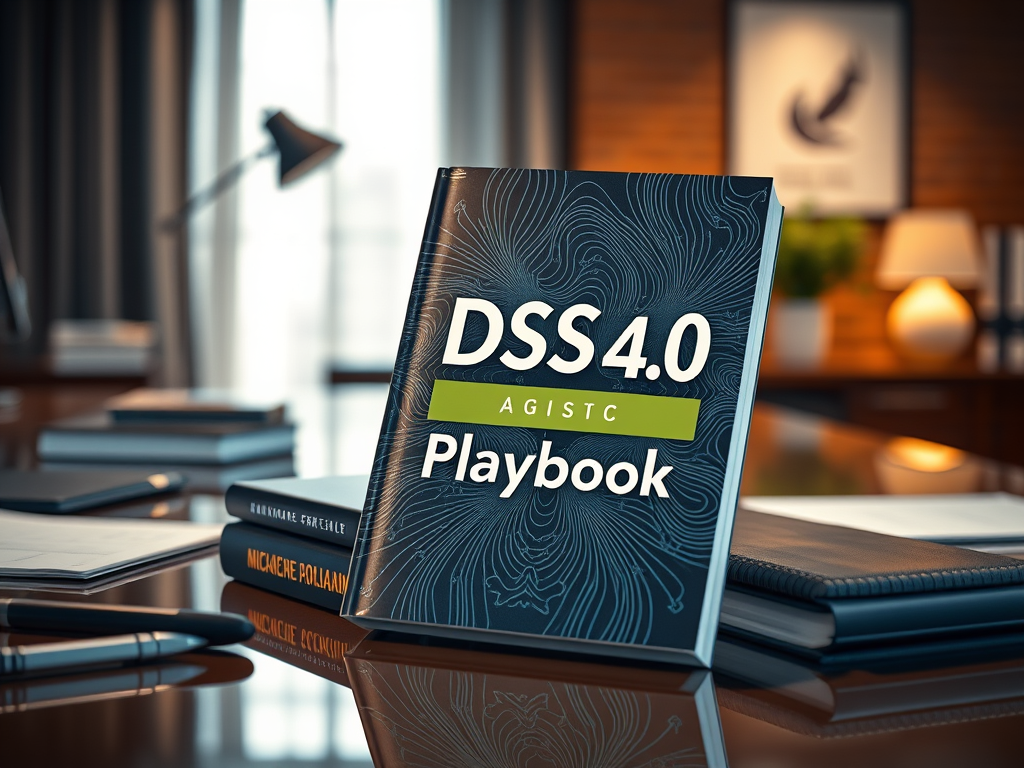
    🌐 A new book Launch: “PCI DSS v4.0: The Cybersecurity Playbook for Technical Leaders”

    From Cardholder Data to Cloud: Risk-Based Defense Strategies for Compliance

    Advance Your Brand. Support Real-World Security. Reach New Audiences.


    You’re invited to join a limited group of industry leaders partnering in the launch of a new professional book on PCI DSS compliance, strategy, and AI-driven cybersecurity operations.
    Whether you’re a security vendor, consultancy, merchant services provider, or PCI practitioner — this is your chance to be part of a high-impact release that delivers real value to your clients and visibility to your brand.


    🚀 About the Book

    PCI DSS v4.0: The Cybersecurity Playbook for Technical Leaders is a field-focused reference for professionals responsible for securing cardholder data and maintaining compliance in a changing threat landscape. The book includes:

    • Real-world case studies
    • Implementation checklists
    • Proven strategies for issuers, acquirers, processors, and service providers
    • Bonus insights on AI-powered threat response

    📖 Pre-publication version available now for review.


    🤝 Opportunities for Partners

    Early access partners can benefit from:

    Featured placement as a supporter or sponsor in the book’s front matter
    Bulk pre-orders at discounted rates for your team or clients
    Brand promotion through co-branded webinars and content post-launch
    Association with trusted, expert-driven PCI content


    📩 Want to See a Preview?

    We’re currently offering select partners the opportunity to:

    • Preview the Table of Contents and sample chapters
    • Discuss custom partnership packages
    • Explore bundling options with your services or events

    This is a limited pre-launch invitation. Let’s discuss how your organization can be featured.


    📞 Contact the Author

    📧 Email: [email protected]
    📱 @udilevin1 – Telegram
    🔗 https://www.linkedIn.com/in/udilevin/
    🌍 https://pcicompliances.com

    Or use the comment form below (private) to request the preview PDF and partnership details


    📘 Make PCI DSS Simpler. Smarter. Stronger.

    Join us in shaping the future of PCI DSS and real-world security.

  • Credit Card Processor Risk of Attack

    Credit Card Processor Risk of Attack

    There have been successful attacks on credit card processors in the past. Credit card processors, which are responsible for handling payment transactions between merchants, banks, and card issuers, can be targeted by attackers seeking to steal payment data or disrupt payment processing operations.
    One notable example is the 2014 cyberattack on JPMorgan Chase, which is one of the largest processors of credit card transactions in the world. In this attack, hackers gained access to the bank’s computer systems and stole the personal and financial information of over 83 million customers, including credit card data.

    Another example is the 2018 breach of the payment processing company, First Data. In this attack, hackers gained access to a web application used by First Data and stole payment card information of customers from a number of merchant websites.

    These attacks highlight the need for credit card processors to implement robust security measures and constantly monitor their systems for vulnerabilities and suspicious activity. They also demonstrate the importance of maintaining a strong security posture throughout the payment processing ecosystem, including merchants, banks, and card issuers, to prevent attacks and protect sensitive payment data.